

Abbas Dhami
Specialist Diagnostic Radiographer
Most people blame back pain on a bad lift or a rough night's sleep. They never stop to think about the hours spent hunched at a desk, or the fact that their hips have been slightly off for years. Poor posture builds quietly. By the time pain shows up, the habit behind it has usually been running for a long time.
Poor posture rarely hurts in just one spot, either. It travels through the spine, into the pelvis, down through the hips, and into the knees. The back aches. The hips feel tight every time you sit. The knees hurt even though nothing looks wrong with them. None of it seems connected, but usually it is. Standard scans lying flat miss a lot of this because the body is not carrying the same load it does on its feet. EOS imaging in London captures the skeleton upright under real gravity, which is why it finds things other scans do not.
How Poor Posture Affects the Whole Body
Think of the body less like a set of separate joints and more like a chain. Pull one link out of place, and the links on either side of it have to bend to compensate. Do that long enough, and those links start hurting, too.
- Spinal imbalance changes how load travels through the back and pelvis
- Pelvic tilt tugs the hips out of their natural position and increases joint pressure
- Hip pressure alters the angle at which the legs move, putting an uneven load on the knees
- Knee strain changes how you walk, pushing more stress back up into the lower back
This is how someone can spend half a year treating knee pain, get nowhere, then find out their pelvis has been tilted since they were a teenager. Or how back pain keeps coming back every few weeks because the hip position actually causing it was never once assessed. One fault. Several places carry it. Classic pattern.
Can Bad Posture Cause Back Pain?
Yes, genuinely. And it is probably one of the most common causes of persistent back pain that never gets traced back to its real source. It does not come on suddenly. It is months, sometimes years, of sitting and standing in positions the spine was not built to hold for long stretches at a time.
When you hold a poor position for hours, the muscles keeping you upright fatigue. Disc pressure climbs. Over time, vertebrae shift just a little here, a little there. Back pain from slouching is almost a job hazard for anyone who works at a desk and leans slightly forward most of the day without noticing they are doing it.
Common patterns people recognise:
- Lower back ache from an exaggerated lumbar arch or a completely flat lower back
- Upper back stiffness from rounded shoulders and a chin that has crept too far forward
- One-sided back pain from uneven hips or a spine that leans one way under load
- Pain that shifts around as the body tries different compensation strategies
If the back pain keeps coming back after treatment, the cause has not been identified yet. ScanAlign’s guide on back pain and poor posture explains what EOS imaging can find in these cases that a lying-down scan simply cannot.
Why the Hip Joint Hurts After Sitting for Too Long
Standing up from a chair and immediately feeling that hip ache is something a huge number of people deal with every single day. Most of them have been told it is just tightness. Sometimes it is. But posture is very often the actual reason.
When you sit with your alignment off, the hip flexors at the front of the hip start to shorten. Sit like that long enough, and those muscles stay shortened. When you finally get up, they pull hard on the pelvis and lower back on the way. That pulling sensation is the ache.
Sore hips after sitting also come from:
- Sustained hip flexion, keeping the joint stuck in one compressed position for too long
- Weak glutes that went quiet while you were sitting and cannot properly support the hip when you stand
- Anterior pelvic tilt, pressing constantly on the front of the hip joint throughout the day
- Uneven sitting weight, loading one hip more than the other hour after hour
Hips that ease off when you get moving but hurt again every time you sit back down are not just a stretching problem. That recurring pattern is the body asking to be looked at properly.
Can Sitting Cause Hip Pain?
Most people think of sitting as neutral. It really is not, especially if you are doing it badly for eight or nine hours a day. When you sit slumped or leaning forward, the hip flexors shorten, the glutes switch off, and the pelvis tips forward or to one side. That adds uneven load through the hip joints day after day, and uneven load eventually becomes pain.
Spending long hours in a chair can also drive:
- Pelvic misalignment that drags the lumbar spine out of its natural curve
- Sciatic nerve tension when the lower back rounds forward in the seat
- Hip joint stiffness because the joint capsule tightens when it does not get regular movement
- Lower back pressure as the spine loses its natural shape during a long slump
If you sit most of the working day and feel hip pain and alignment issues building up through the afternoon, the chair and how you are sitting in it are doing more damage than most people realise.
Hips Forward Posture: What Does It Mean?
Hips forward posture, more formally called anterior pelvic tilt, is when the front of the pelvis drops down and the back rises up. The lower back gets pushed into an exaggerated inward curve. Most people who have it genuinely do not know. They just know their lower back hurts most of the time, their hips feel permanently tight, and whatever stretching they do only holds for a day or so before the tension creeps back.
Here is what anterior pelvic tilt actually does to the body:
- Compresses the lower back more as the lumbar curve deepens
- Keeps the hip flexors in a permanently shortened, tight state
- Leaves the glutes overstretched and largely switched off
- Loads the hip joints unevenly every single day
- Pushes the knees inward or outward as the imbalance works its way down
An EOS scan report can show pelvic tilt and pelvic rotation from a real standing position. That measured detail is what takes treatment from educated guessing to something much more targeted.
Why You May Feel Stiff, Painful Hips After Sitting
Stiff, painful hips when you get up from sitting are almost never one isolated thing. Usually, a few problems have ganged up together.
- Circulation slows to the hip joint during long periods of sitting still
- The hip flexors shorten and limit movement from the very first step
- The glutes cannot properly support the hip during the move from sitting to standing
- The spine and pelvis are not sitting in their natural alignment, leaving the hip joint in an awkward position even when you are at rest
Most people notice the stiffness easing after a few minutes on their feet and file it away as nothing serious. But when it happens every single time you sit down for more than twenty minutes, your body is not just being stiff. Something in the alignment needs attention.
Important Note: Stiff hips that gradually worsen over months, especially when lower back or knee pain comes with it, usually point to a structural alignment issue. Exercise may help you feel it less, but it does not always deal with what is actually wrong.
Sore Knees From Sitting: Is Posture Involved?
Sore knees from sitting tend to get treated as a knee problem. That is usually the wrong place to look. The knee sits between the hip above it and the ankle below it. When either of those is out of position, the knee absorbs the difference with every step it takes.
Knee alignment issues often trace back to something going on higher up. Knee pain that comes from sitting too long can be driven by:
- Altered hip alignment changing how the load moves through the knee joint
- Leg length differences making one knee carry more weight than the other consistently
- Inward knee tracking driven by hip weakness or pelvic tilt, not only by a problem in the knee itself
- Joint compression from sitting with the knee bent under poor alignment for hours at a stretch
If knee pain keeps returning despite treatment aimed directly at the knee, the real source of it may be somewhere above.
How Hip, Knee, and Back Pain Are Connected
These three feel like separate problems because they hurt in separate places. In many cases, they are one alignment fault showing up in three different locations. The pelvis is where it starts. When it tilts, the hip shifts. When the hip shifts, the knee tracks wrong. When the knee tracks wrong, the gait changes, and more load drops into the lower back. Round it goes.
Treating each joint on its own, without ever looking at what the pelvis and spine are doing, is often the precise reason the pain never fully goes. The symptom settles. The cause sits there untouched, waiting.
Why Normal Scans May Miss Posture-Related Pain
A lot of people have been told after their MRI or X-ray that there is nothing significant. Confusing, especially when everything hurts. But there is a very straightforward reason it keeps happening.
Those scans are done lying flat. The moment you are lying down, gravity stops pulling on your joints the way it does when you are on your feet going about your day. The spine decompresses. The pelvis relaxes into a position it never really holds when you are standing. A pelvic tilt that is clearly visible when you are upright can look almost normal in a horizontal image. A spinal curve that causes real daily problems can look minor when the load has been lifted off it.
ScanAlign’s guide on weight-bearing vs traditional imaging explains why standing scans can catch what lying-down scans keep missing.
How EOS Imaging Helps Find the Real Cause
EOS scans the whole body while you are standing normally. Front and side views are captured at exactly the same time, in under 20 seconds, giving both a 2D and 3D picture of the spine, pelvis, hips, knees, and legs under the load your body actually carries.
ScanAlign is straightforward about what it does: EOS helps show why you have pain. It can find hidden skeletal imbalances such as a tilted pelvis, a leg length difference, or a rotated spine that may not show up properly on a lying-down scan.
A single EOS session can show:
- Spinal alignment and whether the spine is leaning or rotating under real gravity
- Pelvic tilt and rotation taken from actual standing measurements, not estimated
- Hip balance and any height difference between the two sides
- Knee alignment and the mechanical axis through each leg
- Leg length differences measured precisely while you are on your feet
- Full-body balance and where your centre of gravity actually falls
EOS uses low-dose imaging, which makes it useful for adults, children, and patients who may need more than one scan over time. You can read more in ScanAlign’s guide on EOS scan safety and radiation levels.
When Should You Consider EOS Imaging?
EOS imaging is worth thinking about if:
- Back, hip, or knee pain has not responded to treatment
- Hip or lower back pain keeps returning after sitting
- One shoulder sits higher or there is a visible lean to one side
- Uneven hips or shoulders have been noticed
- A leg length difference is suspected and is affecting how you move
- Pain comes back after physio, chiropractic, or other care without explanation
If previous scans came back unclear, a standing EOS scan may be the missing piece. It shows the body in the position where posture-related pain often appears: upright and under load.
Important Note: No GP referral is needed at ScanAlign for anyone 18 or over. The process starts with a free video consultation before anything else is arranged.
Why Choose ScanAlign for EOS Imaging in London?
ScanAlign is based at 19 Harley Street, London. Standing EOS imaging for posture and alignment is the focus of the service. Every consultation, scan, and report comes back to one question: what is your skeleton actually doing when it is standing under real load?
- Standing EOS imaging covering the full spine, pelvis, hips, knees, and legs
- Low-dose imaging suitable for adults and children
- Free video consultation before anything else is arranged
- Radiology reports from UK-trained specialist radiologists
- GP referral summary to support your ongoing care
- CQC-registered under The Harley Street Hospital's licence
Back, hips, knees, or all three — ScanAlign gives you the picture of why, not just where.
Conclusion
Poor posture does not sit still. It moves through the spine, the pelvis, the hips, and the knees, and it shows up as pain in places that look completely unconnected. Back pain from slouching, hip pain from sitting, and sore knees may seem like separate problems, but in many cases they are one issue living at multiple addresses.
EOS imaging shows the real picture, standing up, under the load the body actually carries. Not a lying-flat guess. The actual skeleton in the position where it hurts. If pain in the back, hips, or knees has been going on without a proper answer, a standing EOS scan at ScanAlign is a direct route to finding out what is actually going on.
Find the Real Reason Behind Your Pain
Back, hip, or knee pain can feel confusing when every scan looks normal. A standing EOS scan can show how your body is really aligned under load. Book your free video consultation with ScanAlign today and take the first step toward a clearer answer.
FAQs
- 1. Can poor posture really cause hip pain? Yes, it can. When the spine and pelvis are out of alignment, the hip joints end up sitting in positions they were not built to hold, which puts extra pressure on the joint surfaces. Anterior pelvic tilt is one common cause, and many people do not realise they have it.
- 2. Why do my hips hurt after sitting? Sitting tightens the hip flexors and switches the glutes off. When the pelvis tips forward at the same time, extra strain goes through the hip joints. Walking around may ease it for a while, but the pain often returns because the alignment has not changed.
- 3. Can bad posture cause knee pain? Yes. The knee sits between the hip and the ankle. When either is in an off position, the knee absorbs the difference with every step. Knee pain that keeps coming back despite knee-focused treatment may have its real source higher up the body.
- 4. Can bad posture cause back pain? Very commonly. Poor posture builds up as muscles fatigue, disc pressure rises, and the spine shifts little by little over time. It is especially common in desk workers and often returns after treatment when the structural cause has not been properly assessed.
- 5. What is EOS imaging used for? EOS scans the full skeleton while you stand. It captures the spine, pelvis, hips, knees, and legs from the front and side at the same time, giving both 2D and 3D images. It is useful for posture-related pain, pelvic tilt, leg length differences, and alignment issues.
- 6. Is EOS imaging useful for hip, knee, and back pain? Yes, particularly when pain keeps returning after standard treatment. EOS shows how the spine, pelvis, hips, and knees are sitting under real standing load. It can help reveal pelvic tilt, leg length differences, and spinal imbalance that lying-down scans may miss.
Continue reading
More articles
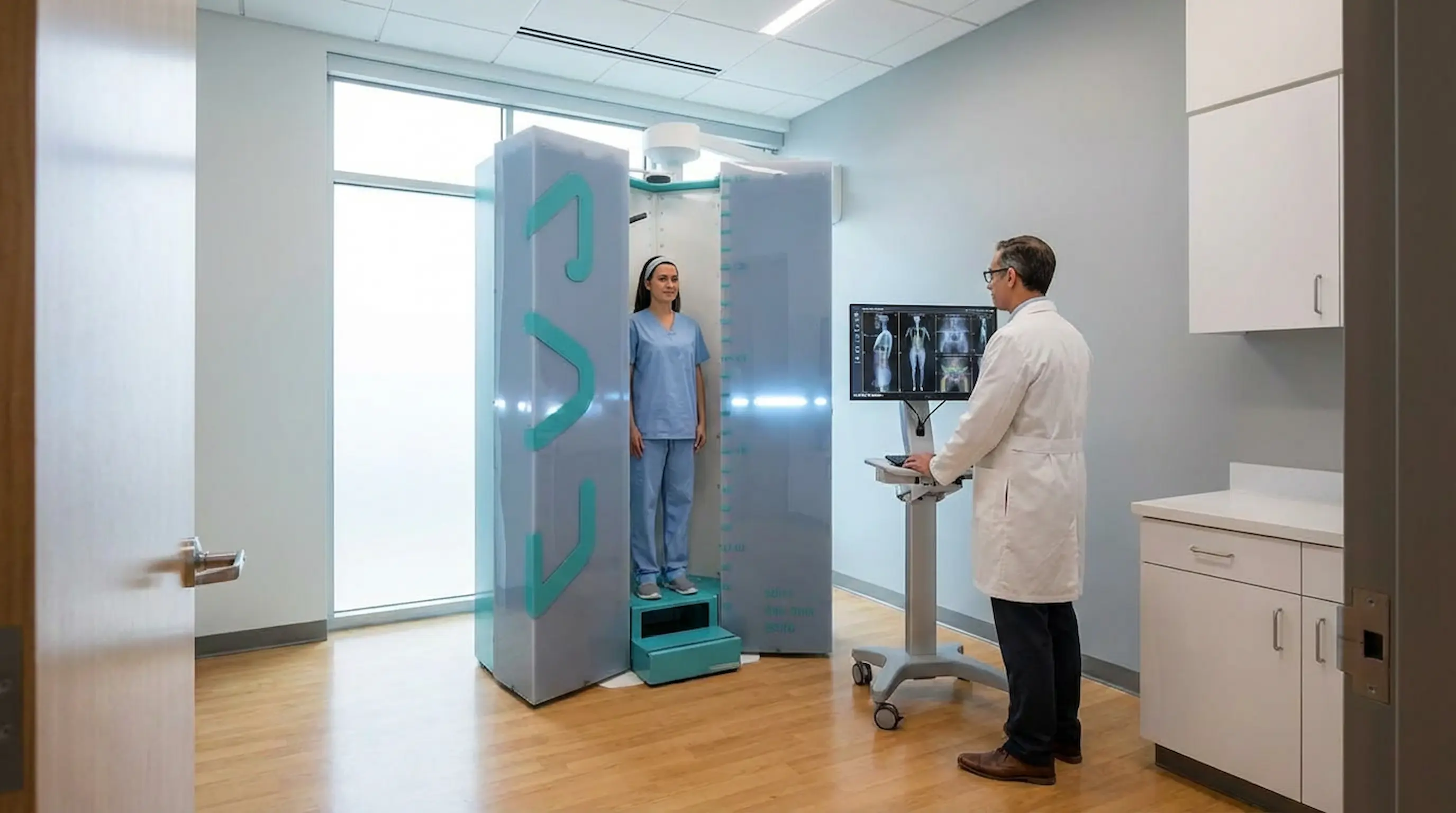
Is EOS Scan Safe? Radiation Levels, Risks, and FAQs
Discover if EOS imaging is safe, its radiation levels, risks, and benefits. Learn why it’s preferred for accurate, low-dose skeletal scans.
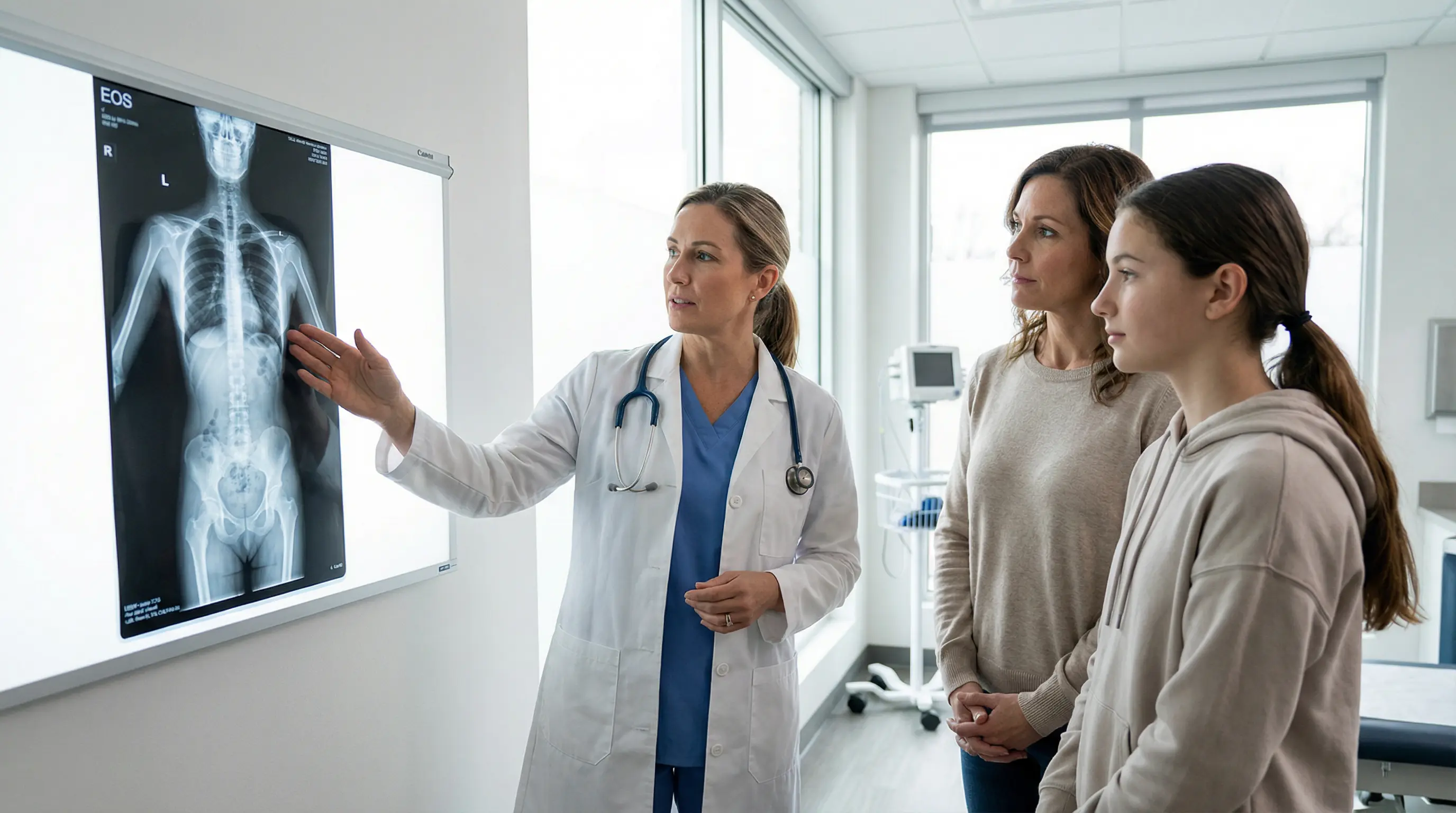
EOS Scan for Scoliosis: Why Standing Imaging Matters
Discover how EOS for scoliosis provides low-radiation imaging for accurate spinal alignment and better scoliosis diagnosis and monitoring.
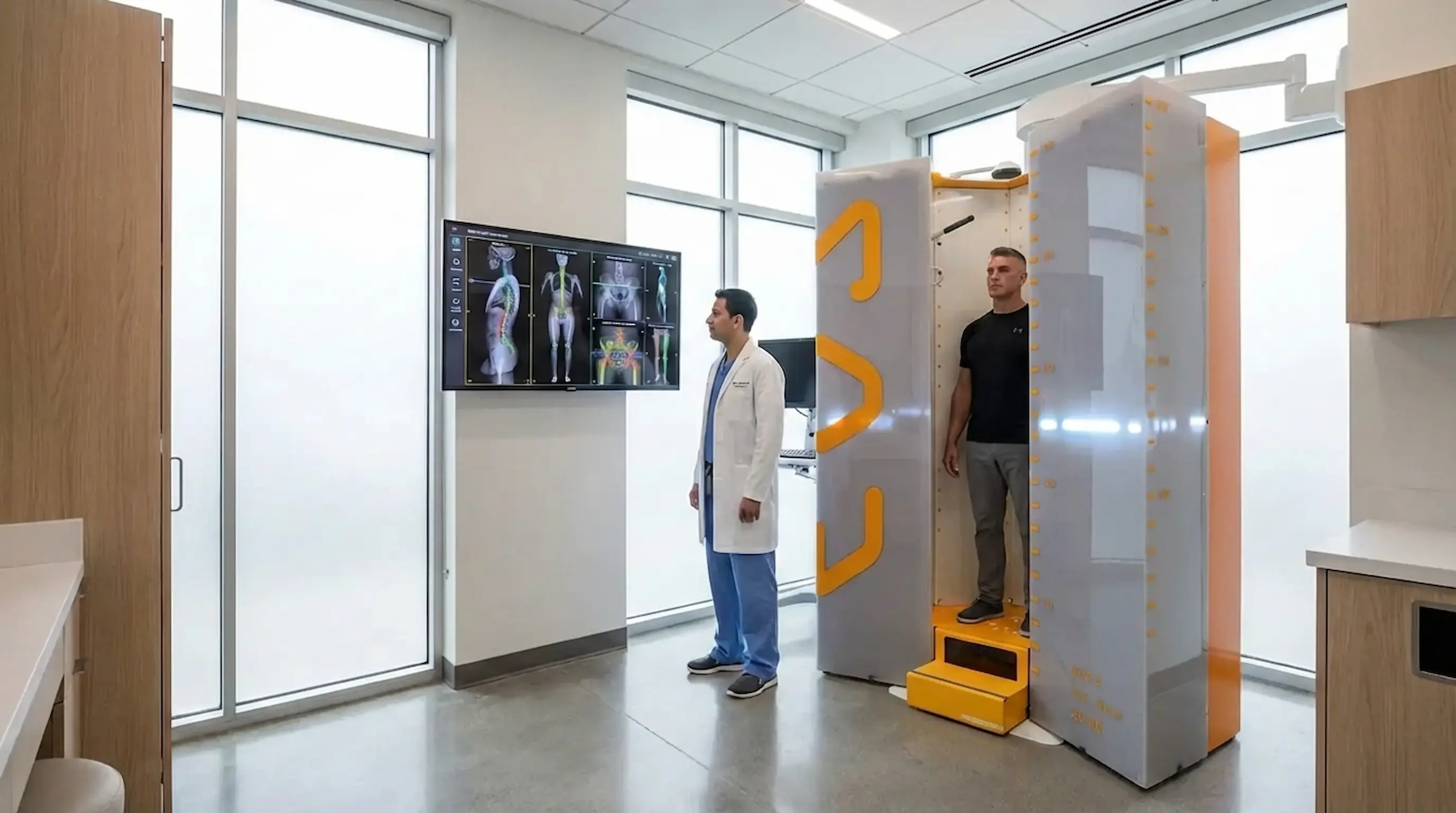
Hip Pain & Alignment: EOS Imaging for Better Diagnosis
EOS imaging for hip pain reveals pelvic tilt, leg length discrepancy & spinopelvic alignment that routine scans miss. Book Appointment now.